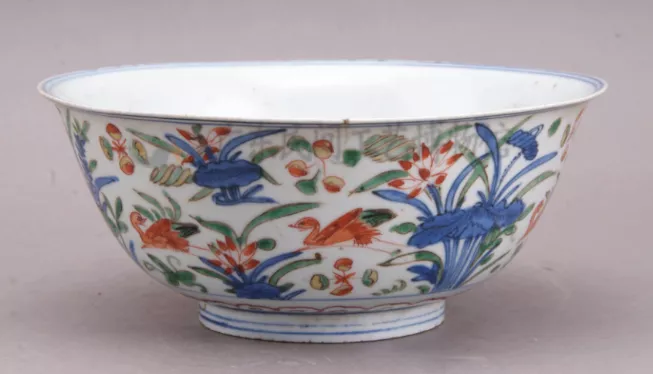
Jingdezhen Porcelain
景德镇瓷器
- 分类: 文化遗产
- ID: 1872657894578352128
Home CategoryCultural HeritageJingdezhen PorcelainPlay4 minsJingdezhen porcelain, from Jingdezhen, Jiangxi, China, is famed for its quality and intricate designs. Known as the "porcelain capital," Jingdezhen has led porcelain production for over 1,800 years. Its prominence peaked during the Ming and Qing dynasties. The Imperial Kiln Sites, significant to Chinese heritage, were added to UNESCO's tentative World Heritage list in 2017.ShareRelated Videos**Firing up the next generation 00:02:41Let's Go to China: Porcelain with cultural warmth 00:15:06Why "porcelain" and "China" go hand in hand 00:02:49One Minute China: The porcelain makers 00:02:00Old kiln bricks, new porcelain capital 00:05:46Unveiling Chinese porcelain: From foreign origins to excellence 00:06:48One Minute China: Porcelains that look like lanterns 00:01:15One Minute China: Five ancient colors of Chinese porcelain 00:01:10One Minute China: Ancient village along the old porcelain road 00:01:32One Minute China: The porcelain makers 00:02:00One Minute China: The art of imperfection in porcelain 00:01:04One Minute China: The secret clay behind Chinese porcelain 00:01:40One Minute China: A real porcelain bowl can 'sing' 00:01:27One Minute China: Blue and white porcelain 00:01:20Catalogue1. Historical Background2. Craftsmanship and Techniques3. Cultural Influence and Global Trade4. Modern Developments and International Recognition5. Economic and Cultural Impact6. Educational and Cultural Exchange
Historical Background
Jingdezhen porcelain, renowned for its exceptional quality and intricate designs, hails from Jingdezhen, a city in Jiangxi province, China. Often referred to as the "porcelain capital" of the world, Jingdezhen has been at the forefront of porcelain production for over 1,800 years. The city's prominence in the ceramics industry reached its zenith during the Ming (1368-1644) and Qing (1644-1911) dynasties, when its porcelain was highly prized both domestically and internationally. The Imperial Kiln Sites of Jingdezhen, which supplied China’s imperial courts, were included in the tentative list of UNESCO World Heritage sites in 2017, signifying their historical and cultural significance.
Craftsmanship and Techniques
The production of Jingdezhen porcelain is a labor-intensive process that involves multiple steps, including the preparation of raw materials, shaping, painting, and kiln firing. The craftsmanship is renowned for its precision and attention to detail, requiring skilled artisans to execute intricate designs. Traditionally, the crafting process includes five key steps, such as casting clay mold, which are essential for creating large-size porcelain pieces. This meticulous approach has been preserved as part of China's National Intangible Cultural Heritage since 2006.
Cultural Influence and Global Trade
Jingdezhen porcelain became a significant cultural medium that facilitated cultural exchange between China and the world. Through the ancient Maritime Silk Road, Jingdezhen porcelain reached Europe and influenced the ceramics industries there, notably inspiring the development of local designs and factories in Britain. The porcelain trade not only enriched cultural connections but also inspired European ceramic production, leading to the establishment of renowned porcelain centers like Meissen in Germany.
Modern Developments and International Recognition
In contemporary times, Jingdezhen continues to be a hub for ceramic artistry, attracting artists and tourists from around the globe. The city boasts approximately 8,300 ceramic enterprises and more than 9,800 self-employed ceramic practitioners, indicating its thriving ceramic industry. Events such as the China Jingdezhen International Ceramic Expo further highlight the city's ongoing influence in the global ceramics market. The city is also a popular destination for cultural exchange programs, fostering collaborations between local artisans and international artists.
Economic and Cultural Impact
Jingdezhen's porcelain industry significantly contributes to local and national economies. The city's commitment to maintaining its rich cultural heritage while embracing modern innovation ensures its continued success and global reputation. The integration of digital platforms and live-streaming has expanded market reach, allowing Jingdezhen porcelain to gain international recognition and appreciation.
Educational and Cultural Exchange
Jingdezhen serves as a center for educational and cultural exchange, attracting thousands of artists and students eager to learn traditional and modern ceramic techniques. Institutions like the Jingdezhen Ceramic Institute offer programs that foster artistic growth and cross-cultural interactions. The city also provides opportunities for artists to explore and experiment, contributing to the dynamic and evolving landscape of ceramic artistry. Article reference1. Porcelains from Jingdezhen showcased at the CIIE. chinadaily.com.cn. 20232. Ancient city's passion for porcelain still burns. chinadaily.com.cn. 20213. Sweat and clay: Process of making Jingdezhen's porcelain. chinadaily.com.cn. 2017Photo Gallery(9 pictures)CategoriesCultural HeritageTagWorld HeritageWorld Heritage in ChinaChinese Cultural SymbolIntangible Cultural HeritageRelatedJingdezhen KilnCatalogue1. Historical Background2. Craftsmanship and Techniques3. Cultural Influence and Global Trade4. Modern Developments and International Recognition5. Economic and Cultural Impact6. Educational and Cultural Exchange- - - []








